Thursday, 3 October 2013

THE BBC AFRICA DEBATE: Children need to grow up in a democratic nation

By Brian Phiri

The British Broadcasting Corporation BBC held its monthly debate in Lusaka on the 26th of September 2013.The debate that was held under the theme “Can democracy deliver for Africa?” was held at the Government Complex in Lusaka.  It was attended by various government representatives with the Republican Vice President Dr. Guy Scott being one of the panellists, opposition political party leaders such as the Movement for Multi-party Democracy (MMD) President, Dr. Nevers Mumba and party officials.  Journalists, college and university students, voters and the civil society also made the audience.
Don Damon Presenter of the BBC World Service Daily Radio and Alex Jakana BBC Africa presenter moderated the debate. The target of the debate was to find out if democracy is one of the best forms of government as to which Africa can be ruled by and Zambia was picked as it is thought to be one of the countries that have upholded a peaceful democratic rule for several years.
“The subject of this edition has been one of the most popular topics suggested by various listeners of the debate, and questions of this kind have come up time and again,” stated Alex Jakana. He continued to say that Zambia has an image of a working peaceful democracy that has appeared to be under threat lately thus the theme.
The three panellists being the Republican Vice President Dr Scott, Sipho Malunga, the Executive Director of the Open Society Initiative Southern Africa (OSISA) and Linda Kasonde a lawyer under the Law Association of Zambia (LAZ) were put in a tight spot as many questions, contributions and criticisms arose from the audience ranging from poverty, mining and the main issue of democracy being dead in the country since the ruling Patriotic Front (PF) government took over leadership in 2011.
Many in the audience felt that democracy has lost its true meaning from Abraham Lincoln the first President of the United States of America’s definition. Among the many who criticised the presence of democracy being present in the country was Elijah Ngwale, a disability rights activist.
The opposition also strongly attested to the fact that democracy has lost its meaning in Zambia. “Of course the whole nation at large rejoiced when the Patriotic Front government was declared the wining party, but in the two years of governance, this government has failed to deliver to the people rule by the people, for the people with the people. It seems everyone is hungry for power and being in government,” one of the opposition officials stated. The issue of land wrangles by the ruling governments’ cadres in the country was also raised and the president’s silence was questioned. It was also stated to say that because of these land situation children’s futures were being destroyed as they are the ones who suffer most. “Are cadres now going to rule our country? What next? Have we failed as a democratic nation?” they asked.
In an interview with BBC presenter and moderator of the debate, Don Damon after the debate, he highlighted the importance of hosting the debate for the children.   “I have covered some rather tragic stories involving children in many countries were democracy isn’t the rule of the day, but military rule mostly. Many children are affected by military and dictator forms of governments hence rebels arise and involve children to take part in the fights against the government and many children die,” Damon said.
He also said in these countries poverty is the order of the day and malnutrition and hunger attack the children mostly. “Children need to understand what democracy is all about. It is important for children to grow up in a democratic kind of government and not only that, children need to participate in democracy as this is their right, and in decision making they should also be involved. They should be given a voice in a democratic country to speak out in the many issues that affect them,” he stated.
The panellists also believe that democracy can make it for the country as one party rule, military and traditional rule failed to deliver a sustainable government for any country. Dr. Scott defended the PF saying the democracy of 1991 from the one-part era to the current government, is incomparable as the former governments were much worse-off in terms of infrastructure, education, economic development and employment. But if Zambia wasn’t a democratic nation there wouldn’t be fair elections or  no elections at all, but because we are a democracy we still have peace and still called a developing country”  Dr Scott said.

‘Not much at the debate was covered for the children’ hence Damon hoped that next time the BBC hosts a debate, children will be involved. The Children’s News Agency with support from European Union.

Wednesday, 2 October 2013

BOARDING SCHOOLS VS. DAY SCHOOLS

                          By Diana Ejemenye
       With many pupils passing their exams this year, there is the common question of which school they would be pleased to go to. Pupils have the very choice of either going to a boarding school or the most common: a day school. But the true question that even parents want to know is: which one is better?
          According to Rebecca Phiri, who is a pupil at Munali Girls School, says that boarding school is way better. In her own words, boarding schools give pupils peace of mind because they are free from the stress at home. She added that it is much easier to study at boarding school than at home because there are fewer distractions. Though she changes and says that day school is pretty good because of the amount of free time it gives.
        Although, most people on the internet argue that boarding schools separate the child from the family, and instil a feeling of abandonment by parents in the child. As one of the users on yahoo answers said: “You find that keeping your child away from you for so long makes your child’s relationship with you deteriorate. When your child comes back home, he or she is like a person that you don’t know.” Other issues that were brought up were that bullying was harder to run away from. I mean, how can you possibly run from the bullies when you actually live in the same dorm with them? This leads to the feeling of fear in the children, and makes them not focus on their education while they are at the school.
    But with day schools, children have enough time with their parents and are able to build relationships with them. Day schools are an equal balance between education and relaxation for the children. Pupils also have a less chance of getting their items stolen compared to boarding school where chances of theft are high. The only problem is that pupils get less time to study, but that can be easily ignored if you make your child go to an all day school.
     In the end, it comes down to the parent and the child themselves. The child and the parent have to be open to both ideas. Most parents don’t mind which type of school it is, as long as their children are getting the education that they need.  On the other hand, a lot of children said that they fear going to boarding school, more than they fear going to day school. They said, as I quote: “Boarding school freaks me out. Just the idea of being away from my parents scares me!” Another one added that her mom does everything for her, including organising her clothes for school and the next week, without her mom she would be nothing. Parents of children that go to boarding school actually argued that the schools have taught their children to be independent, giving them skills that they’ll need in the real world. But one mother said that her child has actually become more disciplined at day school. “The teachers work with her all day, including counselling, and it has changed her completely! Now she actually cleans her room without me telling her to do it.” She said.
     But most mothers, including fathers say that girl children actually become more morally upright at boarding school, particularly girl’s schools, because they teach girls morals as well as normal subjects. Discipline is also instilled in the child, especially in most catholic schools and Christian schools. But according to me, there are also some day schools that do the same, especially those that are religious.

         In the end, it depends on where you decide to take your child. When taking your child to a new school for the new year, make sure you do some research on each school that you want to take them to. Look at the advantages and disadvantages of each school that you have in mind. Go to the school website; even get to know the headmaster or headmistress, so that you make your child’s learning experience a good one and a safe one!        The Children's News Agency (CNA) with support from the European Union (EU)

Friday, 12 July 2013

Empowering children through art

By Chrispin Sinyangwe
A creative mind is one that does not lack innovation. Certainly Bare-feet is no exception, a creative art and performing project, using theatre art, dance, music to support the development of children mostly at risk of disengaging from their communities. Bare-feet offer children an opportunity to have a voice heard and a channel through which to express themselves. The organisation also allows children and young people to showcase their talents while giving them dignity and worth.
Uniquely Bare-feet is made up of young artists, most of whom formally from the streets, now working as artists, facilitators and managers with various responsibilities. The overall goal of Bare-feet is to prevent children from living on the street and the organisation works with its partners to assist in the shared goal of moving the children from the street to a safer environment.
Bare-feet hosts various activities and events such as five toes, interventions, children’s council, Bare-feet youth arts festival, performance and outreach. The children’s council comprises of young activists from 12-18 years of age, acting as ambassadors for Bare-feet. These children advocate for a free and just world. As children representing the future, the children’s council has been equipped with necessary tools to become peer educators and role models, who play a cardinal part in motivating and supporting their communities in developing a positive and health attitude toward life.  
Quest project an initiative by Bare-feet which allows children to express themselves in film production. Being an online collaboration in which provinces around the country have been twined, enables them to interact with each other and post their short films online.
In order that the children showcase their talents in creative arts and film production, Bare-feet organises an annual festival. All partners from different provinces are brought together and children would take part in different activities such as dancing and fashions shows.
Clara Chiteka a pupil from Chinika Secondary School attributed to the fact that the Quest project has helped her unveil her creative side. “Working on short films is challenging but delightful”, says Clara. She highlighted the fact she wants to peruse journalism but also assured herself that she would still remain true to her passion for film production.
Life is full of mysteries and wonders the world has never known, and all it takes is a child with a nurtured mind willing to take the risk in what they believe in and take a stand for it. A child nurtured to never lose hope, even when all seems lost.

  "Never give up on what you really want to do. The person with big dreams is more powerful than one with all the facts."Albert Einstein.    The Children’s News Agency with support from European Union

Friday, 24 May 2013

Children still lacking visibility in the Zambian media


By Chrispin Sinyangwe
All forms of media play an important role towards the development of children. Child participation in the media is cardinal as it allows children to express their views on issues affecting them. Since 2011, the Media Network Child Rights and Development (MNCRD) has embarked on equipping the media and children with skills to cover child rights and development issues in Zambia. Despite all efforts being put in stories on children only catered for 9 % of all stories broadcast during the period monitored.
Results from the 2012 Media Monitoring Report, showed that children covered in the media were mostly portrayed as victims. Forty five percent of stories portrayed children as victims. This indicates a significant increase from 27 percent in 2011 and the increase in reporting on girls was due to the increase of child abuse stories.”
 "Children are sometimes covered in the media but are mostly portrayed as victims, having their opinions almost never heard. It is important for children to take part in media activities to enable them air out their own opinion”, said 14 year old Mwiza Zulu. MNCRD Projects Manager Prisca Sikana expressed sadness at how children had been neglected by the media."Their stories have been looked upon as irrelevant; the only stories considered as news worthy is in the negative. On the part of electronic and print media, not enough space is given to children,” said Ms Sikana.
A former child television presenter, Brian Phiri expressed sadness at how children are only given one day in a week to air out their views on television by some television stations.  “Even though, children do all the programmes on that day, freedom of expression is still hindered as children are told what to do and say”, he adds.
 Press Association of Zambia (PAZA), Executive Secretary Patson Phiri said the organisation has set up a desk to sensitize the general membership and encourage them to cover issues affecting children.
“The capacity to write and report on children’s issues is lacking among journalists in the country. They should be able to interpret issues affecting children in the country and make them interesting in the eyes of the reader.” He lamented.
The Media Monitoring Report is produced by MNCRD and Media Monitoring Africa yearly with the support from the European Union and Save the Children International.
The Children’s News Agency with support from European Union.
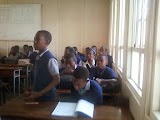


Woes of young people after completing secondary school


By Brian Phiri


  “We were desperate to leave high school and go on a quest to find jobs,” said a group of grade twelve school leavers. “Now that our results are out, we are jobless and we are now desperate to go to college and university, but without money it is 100% impossible for us to do so,” they further said.

After writing their final secondary school leaving examinations in November 2012, many school leavers are now roaming the streets complaining that there is no employment in the country. The school leavers said they have so far written applications to various companies and co-operations to be sales representatives, receptionists, secretaries and even general workers but all this has proved futile. The school leavers said they need employment in order to serve money for university and college expenses.

Other school leavers said government bursaries are also very few and only cater for those with very high marks. Others say they no longer want to depend on their parents or guardians to continue paying school fees for them through university or college while for others, their parents or guardians are not able to raise money required for them to pursue tertiary or university education.

“I have just been home, sleeping and eating for over 5 months since I wrote my grade 12 exams. I have applied for work at over 5 companies and all they have told me is that they need a university degree, certificate or diploma,” 17 year old, Jack Mwaba of Mtendere. Jack further said it was discouraging to know that even a job as sales attendant, receptionist, and general working requires qualifications such as degrees or certificate.

“How can we go to college or university without money? That money can only be earned by doing a particular job, but because unemployment levels are high, very few of us will be able to make it to university or college or even get employed,” lamented Twaambo Saili.

Others spoken to attributed the lack of employment to nepotism, tribalism and corruption across the country. They said that in order for one to get a job in some companies, somebody they know has to work there, or they have to give some money to those offering the employment or one has to be of the same tribe or creed with their prospective employer to get a normal and stable job. The Children’s News Agency with support from European Union.


Monday, 13 May 2013

CHAMA AND SERENJE DISTRICTS’ PLIGHT FOR QUALITY HEALTH CARE DELIVERY RECOGNISED


By Victor Kanguya,
Children are a very vital part of society; their well being and that of their mothers should be taken into account in order to achieve sustainable social, economic and political development. In a bid to achieve this, the Ministry of Community Development, Mother and Child Health (MCDMCH) with its cooperating partners on Tuesday 7th May, 2013 handed over two new Ambulances to Serenje and Chama Districts. This donation was aimed at increasing the country’s momentum in achieving the millennium development goals 1, 4 and 5, with the help of the H4+ CIDA program.
Despite the numerous efforts being made by the Government and its cooperating partners, access to quality maternal and newborns health care has continued to remain a major challenge for most sub Saharan African countries. In Zambia alone, it is estimated that approximately eight women die each day due to pregnancy and child birth and forty eight newborns die due to prematurity complications during delivery and infections. Ill equipment and lack of trained personnel in hospitals especially in farfetched areas has been cited as one of the major barriers to achieving quality health care for Women and children in the country.
Zambia being a United Nations UN member state is required to make efforts to attain the Millennium Development Goals (MDGs). In order to achieve this, Government has partnered with various stakeholders in realizing these goals particularly MDG 4 and 5 targets: where the country is expected to make strides in reducing child mortality rates by two thirds and improve maternal health among others. On Tuesday, Government and its cooperating partners launched the 2013 MDG report. During the launch, it was noted that though the country had achieved much, there was need to accelerate efforts in reducing child mortality rates. The report also highlighted major achievements so far such as the reduction in Child Mortality by 30 percent. However it was observed that Zambia will not be able to achieve the MDG on maternal mortality at the current pace the country is taking.
In a bid to help attain MDGs 4 and 5, various activities are being undertaken. One such program is the H4+ CIDA program. The H4+ CIDA program is comprised of UNICEF, WHO, UNAIDS, UNFPA and the World Bank. The program has been supporting the Ministry of Community Development, Mother and Child Health and the Ministry of Health since 2012 to accelerate progress towards maternal and neonatal morbidity and mortality reduction in Chama, Chadiza, Serenje, Lukulu and Kalabo districts.
UNICEF Zambia Country Representative, Dr. Iyorlumum J. Uhaa said the project aims to strengthen healthcare systems and improve access to quality Reproductive Maternal Neonatal and Child Health (RMNCH) services. He further said, UNICEF is supporting the five districts in order to accelerate progress towards maternal and neonatal morbidity and mortality to enable Government address gaps in the mentioned districts, He said in his speech.
Delivery of quality health care services is vital for the country’s development. Government through the Ministry of Community Development, Mother and Child Health is involved in a number of programs to address the challenge of maternal and child health in the country. During the handover of the two ambulances, Deputy Minister in the Ministry of Community Development, Mother and Child Health Hon. Jean Kapata reiterated government’s commitment in providing quality health care services in the country. She also said the ambulances could not have come at a better time and the gesture must be highly recommended. “These Ambulances have been given to them to accelerate maternal health and prevent unnecessary deaths because no Woman should die while giving birth no matter where they live”, she said.
Despite the acknowledgement that Zambia will not be able to achieve MDG goals on Child Mortality and Maternal Health, the country should still continue to strive and meet these goals. All stakeholders should ensure mothers are healthy all the times in order to reduce on emergencies and save the lives of children and their mothers. The Children’s News Agency with support from European Union

Thursday, 25 April 2013

“WE CAN DEFEAT MALARIA”, WORLD MALARIA DAY CELEBRATED


By Victor Kanguya,
Malaria kills one child every 30 seconds, about 3000 children every day. Over one million people die from malaria each year, mostly children under the age of five, with 90 percent of malaria cases occurring in sub-Saharan Africa. With such developments the world had to respond. In 2007 the World Malaria Day was instituted by the World Health Organisation (WHO) member states during the World Health Assembly. The theme for this year’s World Malaria Day which falls today, 25th April 2013 is invest in the future, defeat Malaria.
World Malaria Day was established to provide education and understanding of Malaria. It is an occasion to highlight the need for continued investment and sustained political commitment for Malaria prevention and control. This day is also viewed as an opportunity for international partners, companies and foundations to showcase their efforts and reflect on how to further scale up interventions against combating Malaria. The World Health Organisation and other partners are calling upon the world to invest in the Malaria fight as this is the major step to eradicating this disease.
Despite Malaria being a preventable and curable disease it has continued to be one of the major causes of death in the world, particularly among Women and Children. Approximately half of the world’s population is at risk of Malaria, most of the cases occur in sub-Saharan Africa. In 2010, Malaria caused an estimated 660,000 deaths (with an uncertainty range of 490,000 to 836,000), mostly among African Children. Malaria mortality rates have fallen by more than 25 percent globally since 2000 and by 33 percent in the World Health Organisation WHO African Region.
Of all people who die from Malaria in Zambia, 50 percent or more are children under the age of five years. Though Zambia has made strides in Malaria prevention and control in the last five years, it still kills more Children under the age of five than any other illness. Malaria affects more than 4 million Zambians annually, accounting for approximately 30 percent of outpatient visits and resulting in almost 8,000 deaths each year. Under five Children and pregnant Women are the most vulnerable, especially those in remote and impoverished areas, with 35-50 percent of under five mortality attributable to Malaria. Poor health seeking behaviour among communities is another challenge related to low awareness about Malaria.
Speaking during the launch of 2013 World Malaria Day, Minister of Health, Dr Joseph Kasonde said government is committed to reducing Malaria in the country. This is why the government has initiated various programmes such as encouraging pregnant women to attend Antenatal, distribution of mosquito nets, indoor and outdoor spraying.
If the world is to maintain and accelerate progress against Malaria, in line with the Millennium Development Goal (MDG) 6, and to ensure attainment of MDG 4 and 5, more funds are urgently required. Malaria prevention and treatment is expensive. Only over the last five years, as a result of partnership between the Government of Zambia, the World Health Organisation WHO, UNICEF and other partners have made the plight of treating Malaria affordable for most Zambians. In order to fight Malaria measures such as the distribution of subsidized nets Insecticide-treated Nets (INTs) are now widely available, but need still outstrips supply. Currently 64 percent of households in Zambia own at least one INT.
Combating Malaria is vitally important in the battle to save young lives and protect Children from losing their Mothers. Since 2000 Malaria mortality rates have fallen more than 25 percent, and 50 of the 99 countries with ongoing transmission are now on track to meet the 2015 World Health Assembly target of reducing incidence rates by more than 75 percent. If the world is to halt Malaria, there is need concerted efforts and self prevention among the public.     The Children’s News Agency with support from European Union.

Tuesday, 16 April 2013

KUKWATILISA BANA TILEKE - STOP CHILD MARRIAGES


By Mwiza Zulu
The Ministry of Chiefs and Traditional Affairs has launched a national campaign against early marriages. The launch which took place on Saturday, 13th April 2013 in Chipata Eastern Province was held under the theme, ‘end child marriages; let girls be girls, not brides’.
Present at the event were Zambia’s First Lady Dr Christine Kaseba, his Royal Highness Paramount Chief Mpezeni of the Ngoni people, UNICEF Deputy Country Representative Ms Gita Gupta, cabinet ministers and many other dignitaries.
In his welcoming remarks, Eastern Province Minister Mr Malonzo Sichone said that early marriages deny the girls and boys of their youth. He said it is also a violation of their fundamental rights and that it was for this reason that the campaign was launched.
In a speech read for him by Mr. George Zulu, Paramount Chief Mpezeni promised his total support to the campaign. He said he was ready to take centre stage in the fight against early marriages. “Girls involved in early marriages are exposed to many health risks”, Mpenzeni said.
Chief Mpezeni added that the government should not be left alone in the fight against early marriages. He further encouraged the traditional community to help in this fight.
Chief Mpezeni further urged the government to create mechanisms to allow chiefs to enforce panic punishment for perpetrators.
The Chief also urged parents to let their children go to school and not marry them off.
Meanwhile, UNICEF Deputy Country Representative Ms Gita Gupta said everyone should not take early marriage as tradition because tradition can change.
“We need to focus on giving disadvantaged families opportunities as alternatives to marrying off their daughters.” She lamented.
The legal marriage age should change so that early marriages should not be justified as culturally acceptable she further said.
Chiefs and Traditional Affairs Minister Prof. Nkandu Luo whose Ministry is behind the campaign said the fight against early marriages is a regional issue and not only a national issue.
And First Lady Dr. Christine Kaseba who was Guest of Honour at the launch said child marriage is one of the most severe violations of child rights. She said child marriages expose the children to violence and abuse and deny children their childhood. The First Lady clearly showed her support to the campaign against early marriages as she frequently said  during her speech, ‘kukwatilisa bana tileke’, which means stop child marriages.
She stated that the government needs to strive to end poverty which is one of the major contributors to early marriages.
She further urged the government to tackle the issue of definition of a child. She said both Customary and Statutory Law should recognize a child as a person below the age of 18.
Child marriage can be stopped in one generation and this campaign is a step forward in the fight against child marriages.
Just as our First Lady put it, ‘kukwatilisa bana tileke’, let girls be girls, not brides. The Children’s News Agency with support from European Union

THE STATE PARTY REPORT ON CHILDREN'S RIGHTS, IS IT SERVING ITS PURPOSE?


By Victor Kanguya,
The Convention on the Rights of the Child (UNCRC) was unanimously adopted by the United Nations General Assembly on 20th November, 1989 and entered into force on 2nd September, 1990. The Convention, which contains 54 articles, is a comprehensive instrument which sets out rights that define universal principles and norms for children. To adequately insure all the protocols were being adhered to, states parties are obliged to submit initial reports.
One of the principle mechanisms by which the treaty bodies monitor the extent of compliance by states parties with their obligations under the human rights treaties is through a system of state party reporting. Under each of the treaties, states parties undertake to submit reports to the treaty bodies; explaining the progress made and problems encountered in implementing treaty obligations.
The UN Committee on the Rights of the Child (CRC) is a body of 18 internationally elected independent experts on Children’s Rights. The Committee monitors progress towards implementing these rights. In assessing a country’s progress towards implementing the UNCRC, the UN committee takes into account the Government’s reports and submissions from non-Governmental Organisations (NGOs) concerned with Children’s Rights and welfare.
The Committee has noted that some of the reports submitted initially were so brief and that the Committee found it necessary to elaborate general guidelines regarding the form and content of reports. These consolidated guidelines were designed to ensure that reports were presented in a uniform manner and to enable the Committee obtain a complete picture of the situation in each state as regards the implementation of the rights referred to in the covenant.
Despite the guidelines, however, some reports are still so brief and general that they do not satisfy the reporting obligations under the Article 44. In these cases the Committee can grant, during examination of the report the possibility to state party to compliment this information within a specified deadline. Governments are encouraged; using the Convention as a guide in policy making implementation to: Ensure that all legislation is fully compatible with the convention as well as develop a comprehensive national agenda for Children among others.
Considering the importance of the UNCRC there is need for states parties to ensure they submit their annual reports to the Committee. Zambia is one of the countries that have fallen significantly behind in the submission of reports, hence making it difficult for the Committee to monitor states parties’ reports. The Committee has the mandate to examine the country’s situation when states have failed to produce a report for several years.
Children are neither the property of their parents nor are they helpless objects of charity. They are human beings and are subject to their own rights. There is need for Children to be adequately represented during public considerations. Even though there are provisions for an individual to make complaints to the UN Committee on the Rights of the Child, children are not considered despite being the cause of action.  The Convention encourages states to take special measures to develop special institutions for the promotion and protection of Children’s Rights.
Children deserve to be highly valued for the unique contribution they make through just being children. Despite the UNCRC being a tool formulated to the highest of standards, many have expressed dissatisfaction with the document. The public have noted the lack of provisions for rigorous sanctions that will compel states parties to produce complete reports and on time. The best interests of the child should be the primary concern of decision making, and all matters relating to children should be of outright importance to everyone. The Children’s News Agency with support from European Union.

Sunday, 7 April 2013

THE WORLD CELEBRATES WORLD HEALTH DAY


By VICTOR KANGUYA
The World Health Day is held each year on 7th April to mark the founding of the World health Organisation WHO. This day is seen as an opportunity by the organisation to draw worldwide attention to a particular subject of major importance to global health each year. This year’s World Health day was held under the theme, high blood pressure.

As the world experiences rapid globalization, the lifestyle in most households has taken a twist. Most people have adopted poor eating habits and a general unhealthy lifestyle. The ultimate goal of World Health Day 2013 is to reduce heart attacks and strokes. One in three adults worldwide has high blood pressure. High blood pressure increases the risk of heart attacks, strokes and kidney failure.

Various local, national and international events are arranged to educate and highlight the public on a priority area of public health concern in the world. This event receives mass coverage and thus it is a good opportunity to raise key health issues. Events such as conferences for health workers, briefings for political leader, information displays for children and young people, public matches and demonstrations; as well as free or easy access to medical tests, can take place on the day.

Specific objectives of the World Health Day 2013 are to raise awareness of the causes and consequences of high blood pressure. The focus of the day was also towards inciting national and local authorities to create enabling environments for healthy behaviour. In developing countries such as Zambia, access to adequate health care is still a challenge even to those in urban areas. Making blood pressure measurement affordable to all has been set as one of the key objectives as the world celebrates this year’s World Health day.

High blood pressure is a condition most often associated with adults, but children can have high blood pressure too even as infants. An estimated 3% of children have high blood pressure in the world. Even though high blood pressure is not predominant in children, the rate among children is on the rise hence there is need to actively involve children in the fight against high blood pressure.

Gift Thandi a pupil from Olympia Secondary School, outlined the importance of young people’s participation on this day. He said children must take an interest to join the fight against high blood pressure and other health challenges, because they are not spared. “Children are part of the solution not only in the fight against blood pressure and other health challenges the world is facing”, Thandi said.

7th April which is World Health day is not a public Holiday. Despite this day not being a public holiday, the public at large inclusive of young people should rise up and be part of the solution to high blood pressure and other health issues.  Even in the event of rapid globalization; people should maintain a healthy lifestyle, such as maintaining a healthy body weight and reducing salt intake if the World is to rid high blood pressure.   The Children’s News Agency with support from European Union.

Monday, 25 March 2013

“SHOW RACISM THE RED CARD”, THE WORLD OBSERVES INTERNATIONAL DAY FOR THE ELIMINATION OF RACIAL DISCRIMINATION


By VICTOR KANGUYA,
                   
March 21st, 1960 marked a tragic day in the history of South Africa and the world at large. Police opened fire and killed 69 people at a peaceful demonstration in Sharpeville, South Africa against the apartheid pass laws. In 1966, this day was declared a United Nations (UN) observatory day.  
The first Article of the Universal Declaration of Human Rights affirms that “all human beings are born free and equal in dignity and rights”. The International Day for the Elimination of Racial Discrimination reminds us of our collective responsibility for promoting and protecting these ideals. This year’s International Day for the Elimination of Racial Discrimination was observed under the theme “Racism and Sport”. The theme was chosen by the UN to highlight the problem of racism in sports; but also crucially to raise awareness of the role sports can play in combating racism.
The fight against racial discrimination is a daunting one and therefore the involvement of youths in this fight is very cardinal. Involving youths and children in this fight will help the young people voice their opinions and find ways to fight racism. In an interview, Chrispine Sinyangwe a Lusaka resident emphasised the importance of involving children in the fight against racism. He said children need to begin to embrace other cultures and races. “Fighting racism requires us as children as future leaders of societies to rise above our indifference and work to achieve greatness as humans,” he said. He further said children need to realize that there is still much to be done to conquer racism.
Sport is crucial in combating racism. There is need to ensure learning institutions such as schools and colleges get involved in anti racism projects. Encouraging socially excluded communities to become actively involved in sports is also important. Show Racism the Red Card Campaign is aimed at stopping racism in society using sport as a tool. There is need to ensure we have inclusive communities in society irrespective of race, gender, nationality, culture or religion. The ruling bodies in sports must ensure there are rigorous penalties in place to squash racism on the playing field.
We all have a role in tackling racism, everyone must remember their obligation and determination in combating racism. Government must lead by example at a national policy level. There is need to show racism and racial discrimination zero tolerance in sports and any other setting in society. The Children’s News Agency with support from European Union.

Tuesday, 5 March 2013

CNA MEMBERS JOIN THE REST OF THE WORLD IN COMMEMORATING ICDB


By Victor Kanguya,
         
The first Sunday of March is a very important day in the world’s media calendar. This is because on this day, children and broadcasters are presented with a unique opportunity to use the power of the media to benefit children. On Sunday March 3rd 2013, members from the Children’s News Agency joined the rest of the world in celebrating the International Children’s Day of Broadcasting (ICDB).
Television has the power to inform, to educate and entertain; this year’s ICDB celebrations marks the 22nd edition since its launch in 1991. Child Journalists from the Children’s News Agency under The Media Network on Child Rights and Development were spread across major media houses. The children took over; the national broadcaster ZNBC TV, Radio 2 and private owned media houses such as; Muvi Television, Radio Christian Voice and TBN.
Some children talked to, who took part in the celebrations also expressed their views. Chrispine Sinyangwe a CNA member said, “ICDB is a platform where children voice out their emotions, feelings and issues affecting them. More of print media should be actively involved in the International Children’s Day of Broadcasting, as much as the electronic media”.
Governments in many countries should embrace this day and should use it as a catalyst for action on behalf of children. Broadcaster involvement should go far beyond the mere allocation of an hour or two of programming and children should play a stronger role each year.
Mwiza Zulu, who has participated in ICDB for the past three years, also expressed her views. She said there has been no notable improvement in the way the day (ICDB) was being commemorated and there was need to adequately plan future celebrations. She further commended other children who took part in this year’s celebrations for the job well done and urged children who did not take part in this year’s studio celebrations not to despair, as there is a next time.
The National Academy of Television Arts and Sciences (NATAS) and the United Nations International Children’s Emergency Fund UNICEF, in light of the enormous success of the day, decided to introduce the International Council/UNICEF award. This award is intended to honour whose programming of the Day best interprets the theme.
While the saying is that children are the future, it is also clear that children are the present. Their future is so much dependent on their healthy development today. The International Children’s Day of Broadcasting is without doubt, as it is rated as UNICEF’s most successful advocacy initiative. It is hoped that Zambia will continue participating in ICDB activities, and hopefully mint the International Council/UNICEF award one day. –Children’s News Agency.

Sunday, 30 December 2012

A FEAST TO REMEMBER - ZAMBIA’S FIRST LADY HOSTS OVER 400 CHILDERN AT STATE HOUSE


By Kanengo Nakamba

Zambia’s First Lady Dr Christine Kaseba Sata has continued to play an important and active role in promoting and protecting the rights of the Zambian child, earning her international recognition and awards.
To celebrate this year’s Christmas and her birthday, Dr Kaseba held a children’s Christmas Carols and Party for orphans and vulnerable children aged 4 – 10 years at State House.
Scores of children from all works of life stood at bus stations as early as 06:30 hours to wait for the buses to take them to State House. Upon arrival the children were greeted by huge bowls of popcorns, crisps and fruits to devour while they waited for the program to start. Child participation was the melody for the day as all the Masters of Ceremonies were children. All presentations were also made by children.
The place was lit up when the host Dr Kaseba Sata arrived as the children showed signs of unimaginable happiness. She later abandoned her well decorated table for a table where the physically challenged children sat. All the children at the party were asked not to call the President and First Lady by their official names but address them as Papa and Mama.
The President of the Republic of Zambia, Mr Michael Chilufya Sata came 30 minutes after Dr Kaseba and the children could not hide their excitement as they quickly run straight into his arms and chanted his name in sequences despite the tight security.
Dr Kaseba was later invited on stage and surprised with presents, a song by Chungu Musuka and a birthday cake. But before the presentation of the gifts and cake, a vote of thanks was made by 11 year old Vanessa Mwale from the Cathedral of the Holy Cross. In her speech, Vanessa said the children were hopeful that Papa (His Excellency) will soon invite them to discuss developmental issues that affect them because all the adults are doing the work for us. “All the hard work you put in is to ensure that we the children are comfortable and finish our school, we are your motivation to hard work and in the process of working for us you should not forget us”, Vanessa said. In his response, President Sata said, he would invite the children to State House but this time to discuss developmental issues. - The Children’s News Agency with support from European Union.

MEDIA NETWORK CAMPAIGNS AGAINST CHILD SEXUAL ABUSE


By Victor Kanguya
Child defilement is rapidly taking root in our country like a malignant cancer. Just as cancerous cells multiply uncontrollably, destroying healthy tissue. Child Sexual Abuse in Zambia is eating away the moral fibre of our society and destroying childhood innocence in the process.
The Media Network on Child Rights and Development (MNCRD) with support from Firelight Foundation recently held a Bus Campaign against Child Sexual Abuse in Kafue and Mazabuka. MNCRD decided to hold a Bus Campaign in the two Districts (Kafue and Mazabuka) owing to the high number of child sexual abuse cases reported in the two areas.
Mazabuka with about 288,000 inhabitants has recently recorded a rise in the number of defilement cases. Speaking during an interview with the Children’s News Agency, MNCRD Executive Director, Mr Henry Kabwe said the Campaign was meant to sensitise the public about child sexual abuse in Kafue and Mazabuka districts. He further said the organisation carried along a team of journalists in order to facilitate the coverage of the Campaign.
The Campaign provided an opportunity for the public to express their views and air concerns. “The response was overwhelming, we had people coming over to find out more about child sexual abuse”, Mr Kabwe said. “We also had people coming through giving information about certain cases where the police had not made follow up”, he went on to say.
Despite the introduction of stiffer laws such as the increase of the minimum sentence for any person convicted of defilement to 15 years, the country still continues to grapple with child sexual abuse.
The statistics released by the Zambia Police for 2011, indicate that cases of child sexual abuse hit 1,939, with only 511 going through legal procedure 66 withdrawn and 329 still under study. The statistics above are a true representation of the situation on the ground and this should be evidence enough to bring everyone on board in order to fight this crisis.
Child sexual abuse is a subject that should be of concern to every Zambian. There is need to join hands in finding solutions to this problem and organisations such as MNCRD need to be supported for undertaking a Campaign of this nature, as the wellbeing and development of any child should be the most important for every Zambian. - The Children’s News Agency with support from European Union.

Monday, 3 December 2012

MEMBERS OF PARLIAMENT INTERACT WITH CHILDREN


By Victor Kanguya and Kanengo Nakamba

It is a rare opportunity for children to step into the National Assembly and present their petitions to their leaders. But for more over 40 children from Lusaka, Chibombo, Kafue and Chongwe, Tuesday 27th November 2012 was a special day as they walked into the National Assembly to present their concerns and interact with the law markers.  Childfund Zambia with its co-operating partners organised a meeting at which children and the members of Parliament from the Coalition of African Parliamentarians Against HIV/AIDS, CAPAH were present. The meeting was aimed at providing an opportunity for the children and members of Parliament to interact.
Zambia is one of the African countries hardest hit by HIV/AIDS: with about 19 percent of children under 18, mostly orphaned due to the HIV/AIDS epidemic. HIV/AIDS among children has been a growing concern and this has prompted stakeholders such as Childfund to take an active role in combating the problem. The meeting held at parliament was aimed at finding solutions to the problem of HIV/AIDS among children.
 The Coalition of African Parliamentarians Against HIV/AIDS, CAPAH has its membership drawn from all political parties with representation in Parliament. CAPAH Zambia envisions healthy communities with productivity, free from the threat of HIV/AIDS. Taking into consideration its strategic positioning, it is important that the organisation joins hands with other stakeholders in fighting HIV/AIDS among children.
Having been given this rare accordance, the children present at the meeting took the opportunity to share their challenges and experiences. The children through a speech read by a child representative, called on the members of Parliament to further strengthen girl child protection; by putting in place laws that will adequately protect the female child. “The girl child does not feel adequately protected because they are on the wanted list of older men, who are in some cases are infected with HIV/AIDS”.
The children further reiterated their call to the members of Parliament by saying; they are willing to work with the members of Parliament in their communities in HIV/AIDS prevention activities. The children further thanked the members of Parliament for taking their time to meet and interact with them.
The members of Parliament present also called on the children and youth to uphold high moral standards, as the laws they have put in place alone cannot guarantee their safety if they are not cautious.
Childfund Zambia through its Program Director Ms Doras Chirwa also thanked the members of Parliament for their presence. “We are excited to see members of Parliament that are passionate about HIV/AIDS and that have contributed significantly to fighting the pandemic in Zambia”, Ms Chirwa said. Ms Chirwa shared some of Childfund’s core outcomes which are infant and young children to be secure and healthy and children that are confident and educated. She further went on to say, Childfund alone cannot achieve these core outcomes and is looking forward to partnering with other organisations such as CAPAH.
And responding to the children’s presentations, the members of Parliament committed to ensuring that the concerns raised by the children were debated in Parliament. Member of Parliament for Mandevu, Ms Jean Kapata said the Parliamentarians heard the children’s concerns and were happy that some of the issues they are planning to take to Parliament during the next session were highlighted in the children’s presentations.
The HIV/AIDS pandemic should be of growing concern to every well meaning Zambian. The statistics are of great concern and the children called for more sensitisation especially in rural areas. One of the children present at the meeting Cecilia Matenda from Kafue said, “Such events should be extended to rural areas so that children lacking information could be part of them”. “This will give children the confidence to come out in the open and speak out on the issues affecting them”, she said. These calls should be taken seriously as children are the future of any nation. The Children’s News Agency with support from European Union.